 Official Website of the Government of Barbados


Climate Change and its Impact on Bees
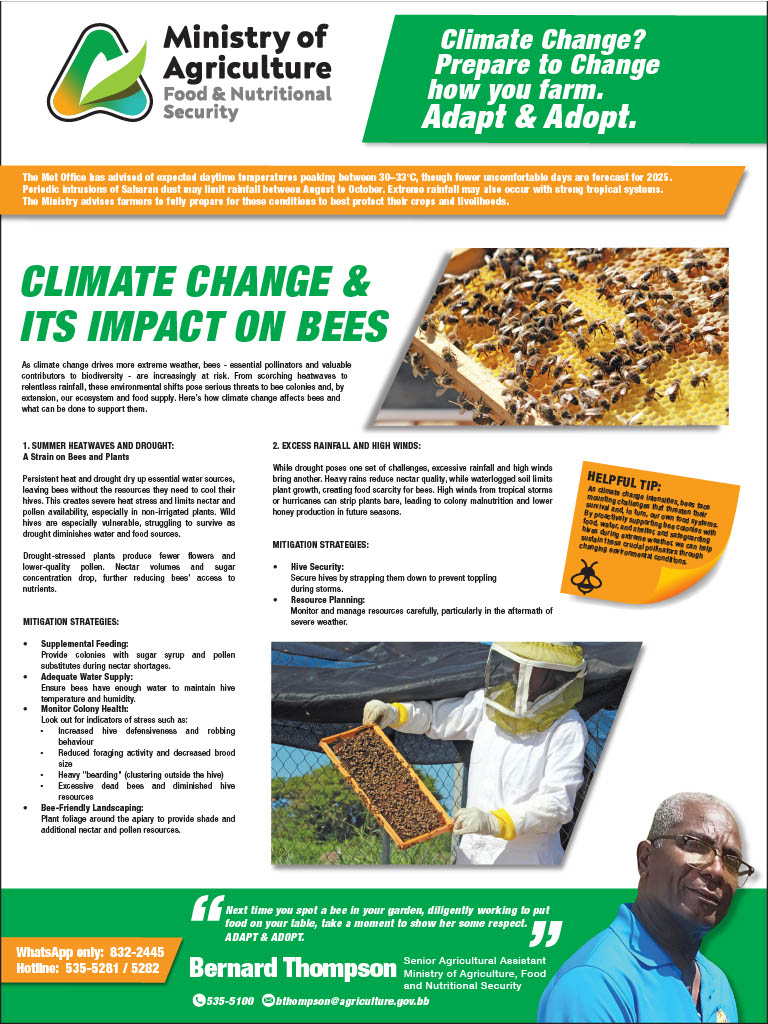
The Met Office has advised of expected daytime temperatures peaking between 30–33°C, though fewer uncomfortable days are forecast for 2025. Periodic intrusions of Saharan dust may limit rainfall between August to October. Extreme rainfall may also occur with strong tropical systems. The Ministry advises farmers to fully prepare for these conditions to best protect their crops and livelihoods.
SUMMER HEATWAVES AND DROUGHT:
A Strain on Bees and Plants
Persistent heat and drought dry up essential water sources,leaving bees without the resources they need to cool their hives. This creates severe heat stress and limits nectar and pollen availability, especially in non-irrigated plants. Wildhives are especially vulnerable, struggling to survive as drought diminishes water and food sources.
Drought-stressed plants produce fewer flowers and lower-quality pollen. Nectar volumes and sugar concentration drop, further reducing bees’ access to nutrients.
Mitigation Strategies:
- Supplemental Feeding:
Provide colonies with sugar syrup and pollen substitutes during nectar shortages.
- Adequate Water Supply:
Ensure bees have enough water to maintain hive temperature and humidity.
- Monitor Colony Health:
Look out for indicators of stress such as:
- Increased hive defensiveness and robbing behaviour
- Reduced foraging activity and decreased brood size
- Heavy "bearding" (clustering outside the hive)
- Excessive dead bees and diminished hive resources
-
Bee-Friendly Landscaping:
EXCESS RAINFALL AND HIGH WINDS:
While drought poses one set of challenges, excessive rainfall and high winds bring another. Heavy rains reduce nectar quality, while waterlogged soil limits plant growth, creating food scarcity for bees. High winds from tropical storms or hurricanes can strip plants bare, leading to colony malnutrition and lower honey production in future seasons
Mitigation Strategies:
- Hive Security:
Secure hives by strapping them down to prevent toppling during storms.
- Resource Planning:
Monitor and manage resources carefully, particularly in the aftermath of severe weather.
HELPFUL TIP:
“Next time you spot a bee in your garden, diligently working to put food on your table, take a moment to show her some respect. ADAPT & ADOPT.”