 Official Website of the Government of Barbados


Climate Change and Root Crops
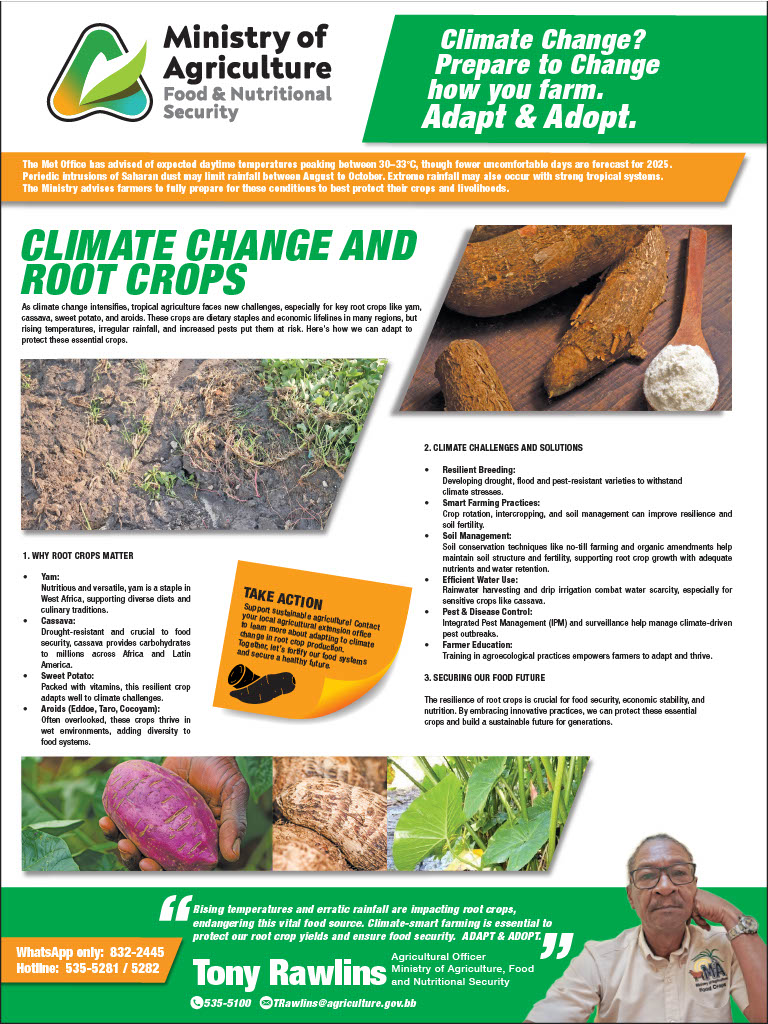
The Met Office has advised of expected daytime temperatures peaking between 30–33°C, though fewer uncomfortable days are forecast for 2025. Periodic intrusions of Saharan dust may limit rainfall between August to October. Extreme rainfall may also occur with strong tropical systems. The Ministry advises farmers to fully prepare for these conditions to best protect their crops and livelihoods.
As climate change intensifies, tropical agriculture faces new challenges, especially for key root crops like yam, cassava, sweet potato, and aroids. These crops are dietary staples and economic lifelines in many regions, but rising temperatures, irregular rainfall, and increased pests put them at risk. Here's how we can adapt to protect these essential crops.
WHY ROOT CROPS
- Yam:
Nutritious and versatile, yam is a staple in West Africa, supporting diverse diets and culinary traditions.
- Cassava:
Drought-resistant and crucial to food security, cassava provides carbohydrates to millions across Africa and Latin America.
- Sweet Potato:
Packed with vitamins, this resilient crop adapts well to climate challenges.
- Aroids (Eddoe, Taro, Cocoyam):
Often overlooked, these crops thrive in wet environments, adding diversity to food systems.
CLIMATE CHALLENGES AND SOLUTIONS
- Resilient Breeding:
Developing drought, flood and pest-resistant varieties to withstand climate stresses.
- Smart Farming Practices:
Crop rotation, intercropping, and soil management can improve resilience and soil fertility.
- Soil Management:
Soil conservation techniques like no-till farming and organic amendments help maintain soil structure and fertility, supporting root crop growth with adequate nutrients and water retention.
- Efficient Water Use:
Rainwater harvesting and drip irrigation combat water scarcity, especially for sensitive crops like cassava.
- Pest & Disease Control:
Integrated Pest Management (IPM) and surveillance help manage climate-driven pest outbreaks.
- Farmer Education:
Training in agroecological practices empowers farmers to adapt and thrive.
SECURING OUR FOOD FUTURE
The resilience of root crops is crucial for food security, economic stability, and
nutrition. By embracing innovative practices, we can protect these essential
crops and build a sustainable future for generations.
TAKE ACTION:
Support sustainable agriculture! Contact your local agricultural extension office to learn more about adapting to climate change in root crop production. Together, let’s fortify our food systems and secure a healthy future.
WhatsApp only: 832-2445
Hotline: 535-5281 / 5282
“Rising temperatures and erratic rainfall are impacting root crops, endangering this vital food source. Climate-smart farming is essential to protect our root crop yields and ensure food security. ADAPT & ADOPT.”